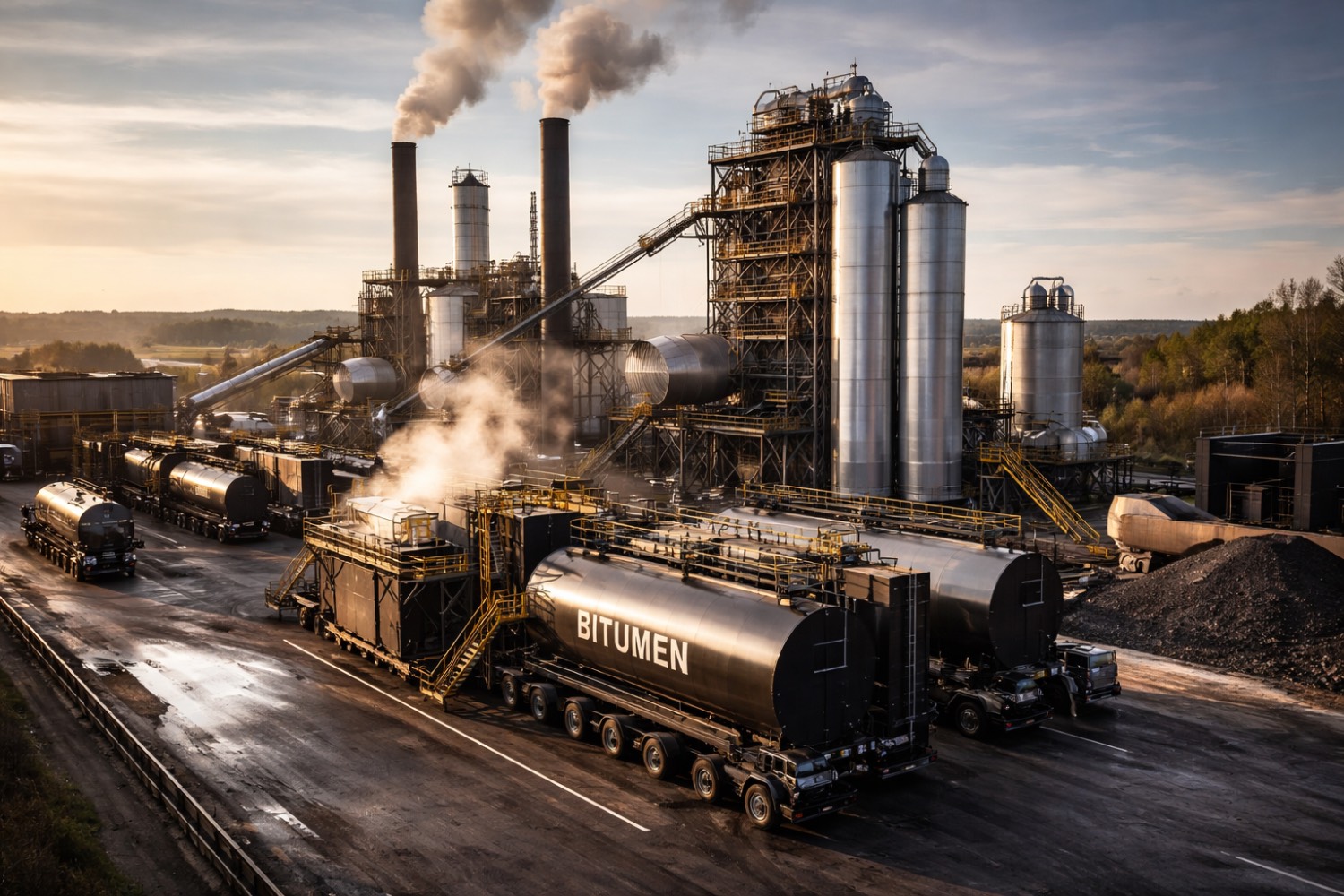
The future of Bitumen and Asphalt is expected to evolve significantly as technology, sustainability goals, and infrastructure demands continue to grow. Roads are one of the most important parts of modern infrastructure, and improving their durability, safety, and environmental impact is becoming a global priority.
One of the most important trends in the asphalt industry is sustainability. Governments and construction companies are increasingly focused on reducing carbon emissions and minimizing environmental impact. This has led to the development of recycled asphalt pavement (RAP), where old asphalt from damaged roads is reused in new pavement mixtures. Recycling asphalt reduces the need for new raw materials, lowers energy consumption, and significantly cuts construction costs.
Another major development is the use of advanced asphalt technologies. Engineers are working on modified bitumen, which includes polymers and other additives that improve flexibility, strength, and resistance to extreme weather conditions. These improvements help roads last longer and reduce maintenance needs, which saves both time and money for governments and road authorities.
Smart infrastructure is also shaping the future of asphalt roads. In the coming years, roads may be designed to interact with smart vehicles and traffic systems. Some research projects are exploring asphalt surfaces that can generate energy, melt snow using heating systems, or even monitor road conditions using embedded sensors.
Climate change is another factor influencing the future of asphalt materials. As temperatures rise and weather patterns become more extreme, traditional asphalt mixtures may not always perform well. Scientists and engineers are therefore developing new formulas that can resist higher temperatures, heavy rainfall, and increased traffic loads.
In addition, bio-based alternatives to bitumen are being studied. Since bitumen is derived from petroleum, researchers are looking for renewable materials that could partially replace it. Materials made from plant oils, lignin, or other organic compounds are currently being tested as more sustainable binders for asphalt mixtures.
Finally, the future of asphalt will also be shaped by automation and modern construction methods. Advanced paving machines, digital monitoring systems, and artificial intelligence are helping engineers design better roads and perform maintenance more efficiently. These technologies will make road construction faster, safer, and more precise.
In conclusion, the future of bitumen and asphalt will combine innovation, sustainability, and smart technology. With ongoing research and new engineering solutions, roads of the future will be stronger, longer-lasting, and more environmentally friendly while continuing to support the growing transportation needs of the world.
No responses yet